What are micronutrients?
Vitamins and minerals. Your body needs them in small amounts for things like energy release, immune function, healthy bones and carrying oxygen in the blood. Unlike protein, carbohydrate and fat, they do not provide calories.
What is the difference between macronutrients and micronutrients?
Macronutrients are protein, carbohydrate and fat, which you need in large amounts and which provide energy. Micronutrients are vitamins and minerals, needed in much smaller amounts but just as essential. A diet can hit its calorie and macro targets and still be short on micronutrients.
Why track micronutrients as well as calories?
Calories tell you how much you are eating, not how well. Two days with the same calories can look very different for iron, folate or vitamin D. Tracking micronutrients shows the gaps a calorie count cannot.
Which micronutrients are people in the UK most often low in?
The UK National Diet and Nutrition Survey reports low iron intakes in teenage girls and women, and low blood levels of vitamin D and folate across most age groups. One analysis of the survey found around a quarter of women aged 20 to 59 had iron intakes below the minimum needed for good health (Derbyshire, 2018).
Can I get all my micronutrients from food?
For most people, a varied diet can provide most of what they need. The main exception in the UK is vitamin D, which is hard to get from food alone. NHS advice is for everyone to consider a daily 10 microgram vitamin D supplement in autumn and winter.
Which micronutrients does Boone track?
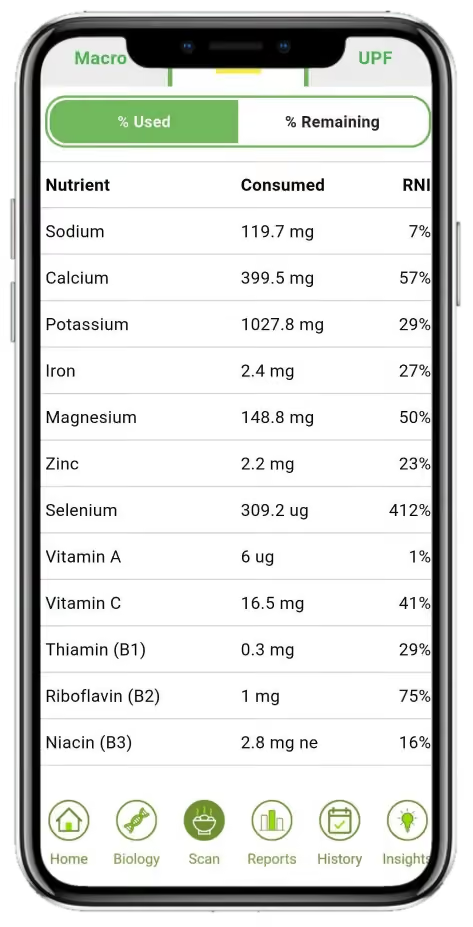
29 vitamins and minerals, including iron, calcium, magnesium, potassium, zinc, folate, vitamin B12, vitamin C and vitamin D.
How does Boone work out the micronutrients in my food?
Every item you log by photo, text, barcode or receipt is matched to nutrition data, and its vitamins and minerals are added to your daily total. Most food labels only show a few nutrients, so Boone uses established food composition data to fill in the rest.
How accurate are the numbers?
They are good estimates rather than lab measurements. Accuracy depends on the portion size and on how closely your food matches its nutrition data. Photo portions are estimated from the image and you can correct them, and packaged products scanned by barcode are usually the most precise.
Can I see how my micronutrients change over time?
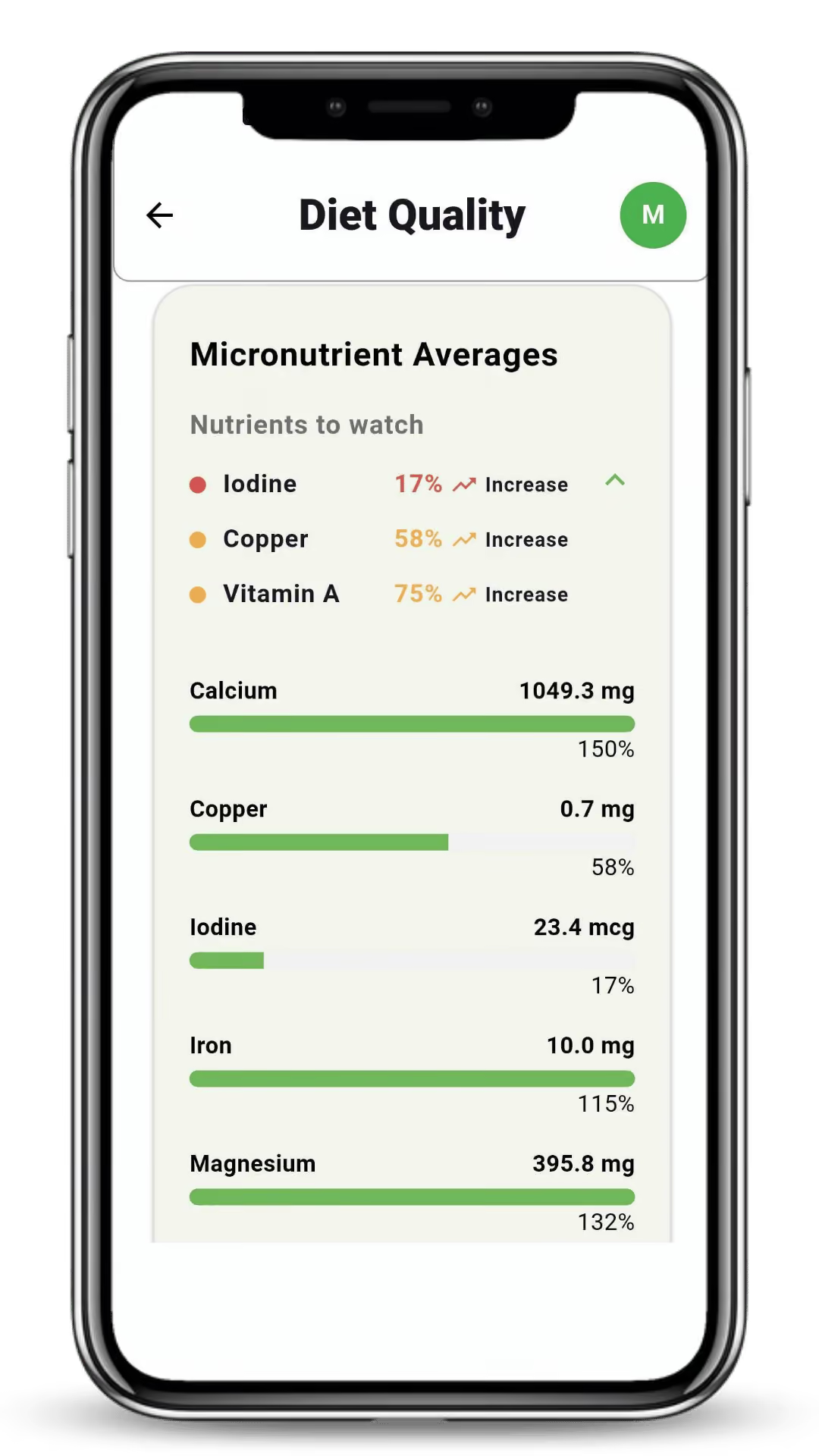
Yes. Boone shows which vitamins and minerals are rising or falling across days and weeks, so you can spot a slide before it becomes a gap. Your full history and trends are part of Premium.
How are my micronutrient targets set?
They follow the official nutrition guidelines for your country, based on your age and sex. You can switch to another country's guidelines in settings if you prefer.
Does being under 100% of my target mean I am deficient?
No. In the UK, reference intakes are set high enough to cover the needs of almost everyone, so many people need less than the target. Being consistently well below it is a sign to look at your diet, not a diagnosis. Only a blood test can tell you if you are actually deficient.
Can I set my own targets?
Not at the moment. Targets follow official guidelines so your recommendations stay balanced.
Can I have too much of a vitamin or mineral?
Yes, for some, although it is uncommon from food alone. The risk is higher with supplements, particularly for things like vitamin A, iron and vitamin D in large doses. If you take several supplements, check the combined amounts with a pharmacist.
Can I log the supplements I take?
Yes. Add a supplement once and it logs automatically every day. Supplements count towards your daily totals, but Boone shows them separately, so you can always see what came from food and what came from supplements.
Does Boone sell or recommend supplements?
No. Boone does not sell supplements and never will. When you are low on something, it suggests foods first, so there is no product behind the advice you get.
What should I do if I am regularly low on something?
Start with the foods Boone suggests. If an intake stays low for a long time, or you have symptoms such as ongoing tiredness, speak to your GP, who can arrange a blood test if needed.
Does Boone tell me what to eat to fill a gap?
It suggests individual foods that are rich in what you are missing, chosen to be close to what you already eat, and you can add them to a shopping list in a tap. It does not give you recipes or meal plans.
Is the micronutrient tracker free?
Yes. All 29 micronutrients are included on the free plan, with two weeks of history. Premium adds all insights and recommendations, plus your full history and trends.
Does my DNA change my micronutrient targets?
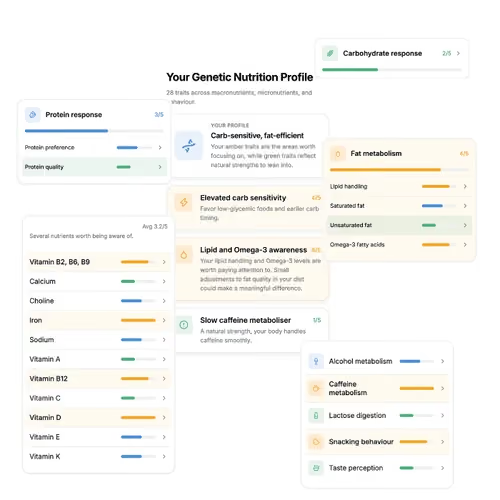
No. If you add the optional DNA test, your profile adds context on areas such as vitamin metabolism, iron and omega-3. It adds weight to the advice Boone already gives, but your targets stay based on official guidelines.
Can I track micronutrients for my family?
Yes. Add a profile for each person in your household, each with targets for their own age and sex, including on the free plan.
Is Boone medical advice?
No. Boone is not a medical device and does not diagnose or treat anything. A low intake in the app is not a diagnosis of deficiency. If you have a health condition or ongoing symptoms, speak to your GP or a qualified healthcare professional.


 29 vitamins and mineralsTargets for your age and sex